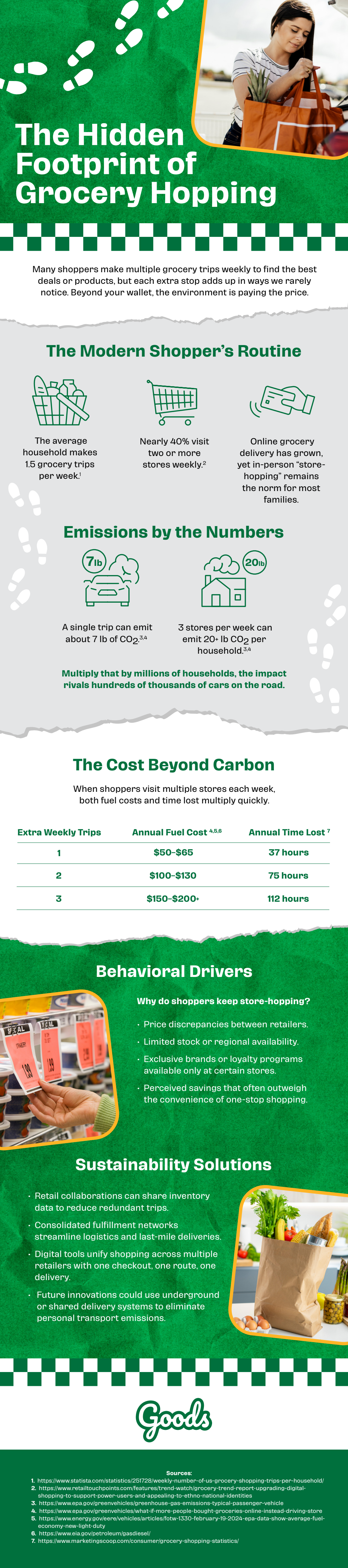
Running errands across multiple grocery stores has become a routine for many households. Price comparisons, specialty items, and weekly deals often push shoppers to visit several locations in a single trip or across a few days. While this habit may feel practical, grocery hopping carries an environmental footprint. Transportation emissions, food waste, and packaging choices all add up, shaping a larger sustainability impact than many consumers realize.
Transportation Emissions Add Up Quickly
Each additional store visit increases fuel use and tailpipe emissions. Even short trips contribute to carbon output, especially when repeated weekly. In suburban and rural areas where stores are spread out, grocery hopping can significantly raise a household’s transportation footprint.
Cold starts play a role as well. Vehicles release higher emissions during the first few minutes of driving, which means several short trips can be more harmful than one consolidated outing. Over time, these patterns contribute to local air pollution and global climate concerns.
Public transportation and walking reduce this impact, but many grocery stores are not designed with easy access in mind. This design reality reinforces car dependence and multiplies the environmental cost of multiple shopping stops.
Packaging Waste Across Multiple Retailers
Shopping at different stores often leads to inconsistent packaging standards. One store may prioritize bulk options, while another relies heavily on single-use plastics. Mixing these purchases increases the volume of packaging waste that enters the household.
Impulse buys also tend to rise with more store visits. Extra snacks, convenience foods, and promotional items often come wrapped in layers of plastic or cardboard. These materials require energy to produce and manage after disposal.
Recycling helps, but does not erase the full impact. Many packaging materials are downcycled or end up in landfills due to contamination or local recycling limitations.
Food Waste and Overbuying Risks
Grocery hopping can complicate meal planning. Buying similar items at different stores increases the chance of duplicates, especially for perishables. Fresh produce, dairy, and baked goods are common casualties of overbuying.
Food waste represents a major sustainability issue. When food is discarded, all the resources used to grow, transport, and store it are wasted as well. This includes water, energy, labor, and land.
Planning challenges grow when shopping trips are spread out. Items purchased earlier may spoil before later ingredients are used, leading to unnecessary disposal and higher household waste output.
The Digital Convenience Factor
Online tools have reshaped grocery habits in recent years. Digital flyers, price alerts, and delivery options encourage shoppers to split orders across retailers. While these tools offer convenience, they can also reinforce grocery hopping behavior.
A grocery pickup app, for example, may reduce time spent inside stores but still involves separate trips or delivery routes if used across multiple retailers. Each order requires coordination, refrigeration, and transportation, which adds to energy use.
Consolidated orders through fewer channels often reduce these impacts, especially when paired with efficient route planning and minimal packaging.
Smarter Shopping for a Lighter Footprint
Reducing the impact of grocery hopping does not require eliminating choice. It starts with planning. Creating a weekly meal outline and sticking to a primary store reduces unnecessary trips and lowers the risk of overbuying.
Choosing stores that offer bulk sections, local produce, and reusable container programs helps cut packaging waste. Combining errands into one trip or selecting locations close to home further lowers transportation emissions.
Grocery shopping habits shape more than household budgets. They influence emissions, waste, and supply chain efficiency. By streamlining shopping routines and making thoughtful choices, consumers can reduce the hidden footprint of grocery hopping and support a more sustainable food system overall. Look over the infographic below for more information.